Insta feed from @THEGLOBALWANDERER

Thursday, December 13, 2012

Story – Who was the fiercest in the Kurukshetra war in the Mahabharat – Bhima or Arjuna?

Bhima and Arjuna once had an argument as to who was the fiercest in the Kurukshetra war in the Mahabharat. Both claimed that they inflicted the greatest damage on the Kauravas. None of the Pandavas or those who participated or witnessed the battle was able to decide who was the fiercest.

Finally, Bhima and Arjuna decided to ask Barbareek, the bodiless head, who witnessed the Kurukshetra war from a hill.

When asked who was the fiercest in the battle and who inflicted the maximum damage on the Kaurava army, Barbareek answer was spectacular. 

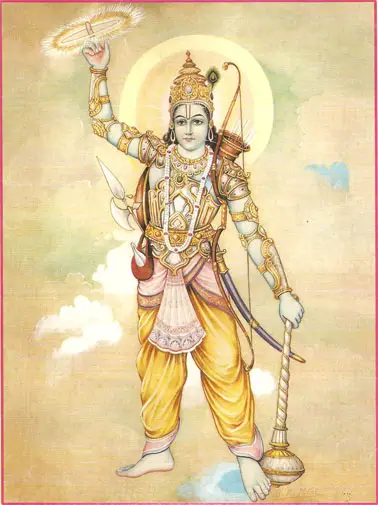
Barbareek he said that he did not see Bhima or Arjuna, he only witnessed Vishnu’s Sudharshana Chakra (discus) cutting the heads of Adharmic kings and people on earth. The earth then took the form of Goddess Kali and drank the blood of the greedy and power hungry kings. 

Sunday, November 25, 2012

Source - InternET

Greatness, you see, is not about easy money. It’s about standing up against the tide of filth and nastiness that is thrown at you and becoming well educated and intelligent – against all the odds

Saturday, November 24, 2012

BUDDHA TEACHINGS

The Four Noble Truths:

1.  All things and experiences are marked by suffering/ disharmony/ frustration (dukkha).

2.  The arising of suffering/ disharmony/ frustration comes from desire/ craving/ clinging.

3.  To achieve the cessation or end of suffering/ disharmony/ frustration, let go of desire/ craving/ clinging.

4.  The way to achieve that cessation of suffering/ disharmony/ frustration, is walking theEightfold Path.


The eightfold path to the cessation of suffering:


1.  Right Understanding of the following facts:

•  the truth about suffering ... (The Four Truths);

•  everything is impermanent and changes;

•  there is no separate individual self- this is an illusion. (We are one!)

2.  Right Determination to:

•  give up what is wrong and evil;

•  undertake what is good;

•  abandon thoughts that have to do with bringing suffering to any conscious being; cultivate thoughts of loving kindness, that are based on caring about others' suffering, and sympathetic joy in others' happiness.

3.  Right Speech:

•  Abstain from telling lies.

•  Abstain from talk that brings harm or discredit to others (such as backbiting or slander) or talk that creates hatred or disharmony between individuals and groups.

•  Abstain from harsh, rude, impolite, malicious, or abusive language.

•  Abstain from idle, useless, and foolish babble and gossip. Abstain from recrimination and negative statements.

•  Abstain from harsh speech—practice kindly speech.

•  Abstain from frivolous speech—practice meaningful speech.

•  Abstain from slanderous speech—practice harmonious speech.

•  Speak the truth if it is useful and timely. Practice only necessary speech. Let your speech be filled with loving kindness. Speak that which alleviates suffering.


4.  Right Action:

•  Peaceful, honorable conduct; abstain from dishonest dealings; take concrete steps necessary to foster what is good.

•  Do things that are moral, honest, and alleviate suffering. Do not do things that will bring suffering to others or yourself.


5.  Right Livelihood:

•  Abstain from making your living from an occupation that brings harm and suffering to humans or animals, or diminish their well being. This includes: activities that directly harm conscious beings, and activities that indirectly harm sentient beings, e.g., making weapons or poisons.

6.  Right Effort:

•  Foster good and prevent evil;

•  Work on yourself—be engaged in appropriate self-improvement. The essence of right effort is that everything must be done with a sense of proper balance that fits the situation. Effort should be balanced between trying too hard and not trying hard enough. For example, strike the balance between excessive fasting and over-indulgence in food. Trying hard to progress too rapidly gets poor results, as does not trying hard enough.

7.  Right Mindfulness or wakefulness:

•  Foster right attention.

•  Avoid whatever clouds our mental awareness (e.g., drugs).

•  Systematically and intentionally develop awareness.

8.  Right Concentration:

•  Developed by practicing meditation and/or mental focusing. Proper meditation must be done continuously while awake, and should include work on awareness of body, emotions, thought, and mind objects.

Tuesday, November 6, 2012

Download Various Veda Mantras


You can download all the prayers in audio mp3 format for free. The long list of prayers includes Shri Suktam, Purusha Suktam, and Vishnu Sahasranama Stotram etc.

All you need to do is right click on the particular prayer and use the save link as option.


mantras help you to calm your mind and get balance

Monday, November 5, 2012

Real freedom is of the mind and spirit; it can never come to us from outside- T.A.G.O.R.E


Let your life lightly dance on the edges of time like dew on the tip of a leaf.

We gain freedom when we have paid the full price for our right to live.

Real freedom is of the mind and spirit; it can never come to us from outside.

Everything else can be kept tied, except joy.

Don’t humiliate yourself, self humiliation is a sin, worse than self murder.

Thursday, November 1, 2012

beauty lies within :)


                                "beauty lies in the eyes of the beholder"


Friday, January 6, 2012

Simple Teachings from Yoga Vasishta

The knowledge of the Self is the fire that burns up the dry grass of desire. This indeed is what is called samadhi, not mere abstention from speech.


He who realizes that the whole universe is really nothing but consciousness and remains quite calm is protected by the armor of Brahman; he is happy.

Just as birds and beasts do not take shelter on a mountain on fire, so also evil (thoughts) never occur to a knower of Brahman.

Firmly convinced of non-duality and enjoying perfect mental peace, yogis go about their work seeing the world as if it were a dream.


Yoga Vasishta

Thoughts on Control of Mind from Yoga Vasishta

The mind, tainted by desire and aversion, contributes to worldly life; the very mind, stripped of them, is said to bring it to an end.


It is mind that is creator of the world. Mind is the real person. That what is done by the mind is considered as really done and not that which is done by the body only.


Except through the extinction of the mind brought about by the renunciation of the desired object – which is within a person’s capacity to do – there is no way to attain the plane of beatitude.


Summoning up your will, by reducing the mind to nought, rise to the supreme state where there is none – neither you nor anyone else.


Yoga Vasishta

Tuesday, October 25, 2011

Freedom is union with the deathless – Gita Teachings

Freedom is union with the deathless; the Self is the essence of all things; its creative power, called action causes the whole world to be.

You are only to perform your duty without an eye on their fruits.

A man must elevate himself by his own mind, not degrade himself. The mind is friend of the conditioned soul, and his enemy as well.

When a man finds delight within himself and feels inner joy and contentment in himself, there is nothing more to be done.

Bhagavad Gita

Radha krishnan views on Rligion

The goal of life is communion with the Supreme. It is a life of realization, when man achieves absolute freedom and escapes from blind servitude to ordinary experience.

Intuition is not emotion but the claim to certain knowledge. It give us a sense of divine reality as a thing immediately certain and directly known.

The problem facing man is the conflict between the divine and the undivine in him. To overcome the conflict and
integrate the personality is the aim of religion.

There are different recognized pathways by which the duality is overcome and perfection reached. In order to see in the world of spiritual reality, we must close our eyes to the world of nature.

Saturday, October 15, 2011

Ishopanishad Mantra 1


ईशा वास्यमिदँ सर्वं यत्किञ्च जगत्यां जगत् ।
 à¤¤ेन त्यक्तेन भुञ्जीथा मा गृधः कस्यस्विद्धनम् ।। (यजुर्वेद ४०.१)                                                                                                                                              
                                                                   
                                                                                                                                          O Human! The entire world – static as well as dynamic – is pervaded by Ishwar – the Supreme Lord. Hence enjoy the pleasures in a detached manner. Do not be greedy. This wealth does not belong to anyone.

Isha – The Supreme Lord

Vasyam – Inhabits

Idam – This

Sarvam – Everything – every point, every location

Yat – Whatever

Kim Cha – And

Jagtyam – Dynamic world

Jagat – Living and Inanimate World

Tena – These

Tyaktena – With detachment

Bhunjitha – Enjoy

Maa – Do not

Gridhah – Be greedy

Kasyaswit – Whose is

Dhanam – This wealth?

Ishopanishad or the 40th Chapter of Yajurveda forms the foundation of all positive philosophies of the world. The very first mantra sets the tone. In few words, it provides the essence of life and living, structure of world and our ideal approach while we live. It states:

- There are three entities in the world – The world around us (Prakriti), Ishwar who resides everywhere and we – the soul (Atman)- who is being addressed in the mantra.

- We do not own the world around us. The owner – the Ishwar – pervades every point that He owns. Now since we do not own the world, the way we should use the facilities of the world should be without a sense of ownership.

- This does not mean we should refuse to use the facilities in the world. By all means, we should make best use of the facilities, but without considering it as our own personal property.

- Under any circumstance, we should not have any greed. Greed is the highest level of foolishness. Neither do we own the world around, nor can we take it with us after we die. Hence running after what eventually would be lost is indeed stupidity. In fact no one can own the world. Even Ishwar owns as a manager and not someone who extracts benefits from the world.

Hence, we should stop acting foolish and start enjoying the world in the true sense.

The mantra teaches another fundamental law of life – You cannot enjoy unless you are detached. The ONLY way to enjoy the world is by getting detached from it. This may seem counter-intuitive on surface but in fact it is not. If you think deeply, you would find that it the lust to own that causes all the worries. Worries start from the very desire of owning something:

- We worry about ways to obtain our desired object.

- Once obtained, we worry about its security and our continued association with it.

- And finally, when it is time to say goodbye, we regret because we now lose it.

In fact true ownership of anything except what you already have – your own self and Ishwar – can simply not happen. It is like chasing a shadow. Sometimes we come very close to it, but it again moves ahead. The only way to chase a shadow is to turn around and face the sun. Instead of chasing the shadow, chase the source of light. And shadow will fall behind.

I recall a joke I heard in childhood where a boy challenged Tees-Maar-Khan (TMK) to touch the red traffic light some distance away and come back while he measures the time. The next morning, TMK was furiously hunting for the boy in the neighborhood. When someone asked whats the matter, he angrily replied, “The boy made me run the entire city behind tail light of a bus!”

I laughed a lot when I first heard it. But gradually I realized this is the dark humor dominating the world today. We all keep chasing the elusive tail light. We glamorize and idolize all those who earned fame, earned wealth, earned power and aspire to be one of them. The hunger never ceases. We keep running for more and more. But we never feel as if we have achieved whatever we ran to achieve. And then suddenly lights go off in this mad race and the show ends. And when the show ends, we all are at same level. All the toys of the world that we collected – name, fame, wealth, power – which we never actually collected but we fooled ourselves to assume that we have collected, evaporate in a split-second. Thus, after all the drama, all the frustrations, all the sacrifices, all the compromises, all the complexities, all the troubles, all the madness, we are back to square one.

An Amitabh, or a Shahrukh, or an Obama, or a Sonia, or a Lalu, or a Pope, or a Zakir, or an Ambani, or an Osama, or a rich, or a poor, or a celebrity, or a non-entity – everyone would die equally rich or equally beggar. Some may argue: “But some of them would leave a legacy that would continue”. But lets be clear – even if legacy continues – no one would be there to even claim that ‘I’ left this legacy. Even the memory of this so-called legacy would wipe out. And then even those people who remember this legacy would also face the same destiny of blankness and forget all the legacies of theirs or their predecessors in one split-second defined as death or “The End” of the show.

In summary, nothing in the world ever belonged to us and nothing gonna go with us despite whatever efforts we may exert to acquire them.


So what are we supposed to do? Sit blankly like a morbid lunatic waiting aimlessly for the final ‘The End’? Well, many a philosophers may suggest so. Some may say that live in present and do not worry about future. Others would suggest that one should enjoy this life to maximum and face the future – death or whatever – when it comes and not bother about it now. Yet another group would advise that death is simply like a fantastic sleep so why worry about it.

But let us be honest, how many of these philosophers and their followers would enjoy their parties and fun when held at gun-point? These all are elusive ideologies that fear to address the core issue and provide only escapades. They are simply attention-distractions. Like a pain-balm which works by confusing the sensation of pain with a new sensation of skin irritation. But then, somewhere from some corner in this body, something raises an alarm – that soon “THE END” would come.

It is natural that all living beings fear and avoid death. If death were indeed so painless, why would there be a natural revulsion to death? Why does society consider murder as greatest crime? This is so intuitively built-in within us that we do not even need to explain this. This is implicit in all the actions we carry in our lives. And when we associate this fact of death with all the running around to gather temporary wealth that we indulge into, we clearly know that we are acting foolish. THIS CANNOT BE GOAL OF LIFE WHEN WE KNOW WE CAN NEVER ACQUIRE IT.

The very first mantra of Ishopanishad, very succinctly not only states that chasing the tail light of bus is simply a foolishness, but also offers a clue to what else should be done. It provides not a pain-balm but addresses the root cause of pain in the very first words of the mantra: That everything is inhabited by the Supreme Lord.

The solution is clear – instead of pursuing what we can never obtain, pursue what is already everywhere – within and outside you. Pursue the Ishwar. Since He is the manager of the entire world, since He alone would remain closest to you forever and wherever you go, so as a smart person, simply follow Him. Instead of chasing a desire that is technically impossible, pursue what is most achievable and most beneficial. Since He is already with and within us, to pursue Him implies understanding Him and conducting actions as per this knowledge.

Thus, the mantra changes the very approach towards life. Instead of being owners of anything including our relations, our body, our thoughts, our minds, our properties, our clothes, our degrees, our fame, our wealth etc etc, we are simply being employees of Ishwar.

- This world is our workplace or our office or company “World Inc”.

- Each thought, each word, each action is being appraised every moment by the CEO – Ishwar – and he keeps promoting or demoting us accordingly.

- We head the business unit called “Me and My World Inc” but Ishwar is the Supreme Head of all such business units.

- We have to work together to maximize profits not only for the Business Unit that we head but for entire organization.

- And we have to work here in same manner as we work in our professional life. The pen, the laptop, the chair, the table, the office facilities, the car that company provides, the flight in which we travel for business purpose etc are not OWNED by us. But we use them and use them with FULL enjoyment – for the sole purpose of the organization. Same goes for World Inc.

- Anyone who uses company resources for his personal gains is penalized in an ethically driven company as per Corporate Governance. In the “World Inc”, we are punished similarly for any cheating that we do against the code of world governance.

- In the mortal company, punishments and rewards are delayed. But in the perfect World Inc, everything is instantaneous. He is present everywhere to ensure this. And he ensures what we get is what we deserve – neither less nor more.

Thus the mantra asks us to enjoy the world and work in it as Business Heads who own ownership of actions and not the resources. All our actions should maximize the profits of entire company and we all should report only to the CEO – the Ishwar. Ishwar, being the smartest CEO, would provide us the resources that we need to fulfill our objectives. Our goal is not to maximize these resources in our business unit but to fulfill the objectives of entire organization.

With this professional business oriented approach towards life, there is no more any scope for fear, worry or aimlessness. Instead of trying in vain to enjoy life because we want to elude the ultimate “THE END”, we tend to proactively and truly start enjoying life with a passion to maximize our achievements before the “INTERVAL” so that we are provided even higher designations after the “INTERVAL”.

Suddenly we don’t feel the need to try being brave and daring in life. We instead feel that to be natural trait of ours. We don’t feel like either running away or indulging in the world. We instead feel like smart managers who UTILIZE the world and its resources for our ultimate objectives. We don’t feel the need to wasting time in enormous fluff of myriad philosophies that only an idle person has time to analyze. We instead feel extremely goal oriented who focus only on what needs to increase the profits. We don’t feel scared of losing any of the world’s resources because we don’t own them in first place. We instead focus every moment on what we have and what we need to acquire for the company goals. If there is a airplane to our destination, we feel no hitch nor any special pride in availing it. We simply use it, plan for next business target and enjoy the process. If there is no airplane, we still feel the same exhilaration pursuing our goals in the bullock cart or cycle or whatever.

We still aspire for wealth and riches and better facilities in world. We still aspire for fame and glory. But we aspire not for our own self. We aspire these only for the goals of this World Inc. We aspire only TO EXTENT THEY FULFILL goals of World Inc. Its no more ‘for me only’. It is for the mission of ‘Idanna Mama’ – ‘Not mine’. Thus instead of being beggars dreaming to be tycoons, we become most well-paid Business Heads of the company!

The mantra summarizes the essence of ‘Idanna Mama’ (Not mine) and ‘Swaha’ (for the larger goal alone) that form the bedrock of Vedic ideology. No wonder, the same values are honored in the most professional and respected of worldly organizations. And that is what makes them successful. When these can achieve so much success by scratching a very tiny surface of Vedic wisdom, just imagine the level of success that is waiting for us when we immerse into Vedas!

One who understands the crux of this mantra even partially would make himself a winner. Instead of wasting time collecting sand and pebbles that eventually will be snatched away from us, the smart follower of this mantra would utilize his stay to collect the jewels that would go with him when the show ends for others! And while others would face the consequences of being corrupt, the smart manager would win his next level of promotion. Further, even in this life, the fools waste life chasing elusive happiness that never comes to them and instead gather tremendous amount of emptiness, frustration, guilt, shame, regret, fear, tension beneath the false gimmick of outwardly bliss. The smart manager, all the while, gathers true bliss, true happiness and enjoys being promoted to further bliss in each moment of noble action.

One may ask, what these noble actions are and what are the goals of World Inc that we are expected to pursue. Now you don’t need any special prophet or incarnation or miracle to tell you that. You simply need to follow your inner voice of accepting the truth and rejecting the falsehood in every moment of life through thoughts, words and actions in most optimal manner. Everything else is derived from this core most inherent intuitive mission. Even need to master Vedas is a derivative of this core essence.

If we delve into this deeply, we would find that this in itself justifies why following the inspiration of Ishwar alone to achieve Ishwar alone through knowledge is the right and only way to achieve bliss. Vedas provide detailed explanations to this and increase our speed and effectiveness. Thus Vedas are the corporate policy guidelines of World Inc. Not only is the text available for reference, but for ease of all, the same has also been inherently copied in our own self a-priori. This is what intuitively keeps inspiring us to do good for the world, pursue happiness, spread knowledge, get into action etc.

We shall in course of more detailed understanding of Vedic Mantras, keep reviewing what these goals are and how are they to be applied as per the Policy guidelines of Vedas. But those willing to explore more details are requested to review http://agniveer.com/series/vedic-lessons/

O Ishwar, may my ignorance that leads me to ignoring You and chasing the world that was never mine be destroyed forever. I promise to put my best efforts for this. With Your blessings I promise to seek You and You alone because You alone are source of bliss! May this noble thought always prevail in me!

Wednesday, September 28, 2011

The 14 Worlds in Hindu Tradition as Mentioned in the Puranas

Those Worlds that are above earth are –

Bhuloka – Earth – the places that our feet touch
Bhuvarloka – This world is between earth and sun. Siddhas and Saints live here.
Swargaloka – Indra and other Devas live here
Maharloka – Hindu God Vishnu resides here
Janaloka – Dead souls reside here.
Tapaloka – Mahrishis reside
Satyaloka – Brahma resides here


The Worlds that are below earth are:

Athalam – Place associated with Yama
Vithalam – Place associated with Shiva
Suthala – King Bali resides here
Rasathala – Rakshasas reside here
Talathalam – Spot associated with Mayamayi
Mahathalam – Place associated with Serpents
Pathalam – Place associated with Yama and Nagas.

When the great cosmic dissolution takes place all the worlds, undergo transformation except for Maharloka the world of Vishnu.
Please note that there are few other such categories of the worlds. This is one among them.

Spiritual Importance of Navratri – Sri Sri Ravishankar

Sri Sri Ravishankar in this article explores the symbolic meaning and spiritual importance of Navratri.
What is the meaning of Navaratri? Ratri, "ra" means giving solace. Solace from three types of problems, that is "tri" - physical, ethereal and causal. Ratri relieves you and puts you to sleep. No animal needs to worry at night. Whether happy or unhappy everybody goes to sleep. In Sanskrit, words are connected to the meaning.
Navaratri has two meanings - “New Night” and “Nine Nights”. It takes nine months for a child to be born. The child rests in the womb during this period. Similarly in Navaratri you get back to the Self - self referral. Dip into yourself and then you come out with more creativity and be victorious. Negative forces - craving and aversion - get relief from all these. Go to the source of energy.

Craving and aversion are two asuras (demons) like "Madhu" and "Kaitabha". Then there is also "Raktabijasura", that which is in your genes. "Rakta" means blood, "bija" means seed. Raktabijasura is like gene in the blood. Sometimes your behaviour is not in your control - it's in your genes, Raktabijasura. Medication and meditation are required to tackle Raktabijasura. When such energy comes to you, transformation happens, the genes change.
Then there is "Mahishasura" - dullness. Dullness like a buffalo. You need "Shakti" (energy) to deal with this. When Shakti comes, inertia is lifted out. "Shumbha" and "Nishumbha" - doubting on everything. "Shumbha" means doubting oneself and "Nishumbha" means doubting others. Doubting at every step. These days people are so busy. Mind is so clogged, so occupied, no time to think of oneself. If someone insults you, don't think it as intentional.
"Chanda" and "Munda". Chanda means opposite head. Chanda will oppose anything you say. One who cannot agree with anything. "Munda" does not have a head at all. Whatever you tell them, it will all go in air. Then there is "Dhumralochana", "Dhumra" means smoke and "lochana" means eyes – smoky eyes. They see everything hazy.

All this is due to lack of Shakti. When you are full of energy and enthusiasm none of these rakshasas (demons) can come in you.
The nine days of Navratri are also an opportunity to rejoice in the three primordial qualities that make up the universe. The first three days of Navratri are attributed to tamo guna, the second three to rajo guna and the last three to sattva guna. Our consciousness sails through the tamo and rajo gunas and blossoms in the satva guna of the last three days. Whenever sattva dominates in life, victory follows. The essence of this knowledge is honoured by celebrating the tenth day as Vijaydashmi.

By worshipping the Mother Divine during Navratri, we harmonise the three gunas and elevate sattva in the atmosphere. Though Navratri is celebrated as the victory of good over evil, the actual fight is not between good and evil. From the Vedantic point of view, the victory is of the absolute reality over the apparent duality.
The Mother Divine or the pure consciousness itself pervades all the forms and has all the names. Recognising the one divinity in every form and every name is the celebration of Navratri. Hence, special pujas honouring all aspects of life and nature are performed during the last three days.

Monday, September 5, 2011

Hindu Blog: Modern Notions of Evolution and Ancient Hinduism

Hindu Blog: Modern Notions of Evolution and Ancient Hinduism:.

In an article titled ‘Ancient Hinduism enlightens modern notions of evolution’ in the Washington Post, Aseem Shukla, Co-founder, Hindu American Foundation, suggest that the concept of modern evolution is nothing new to Hinduism as the concept was detailed in Hindu scriptures.

Excerpts from the article

                 ...cosmology, science, and the ancient Vedas--Hinduism’s sacred scripture--are eerily complementary. Lord Brahma, the Lord of Creation, often depicted as one of the Hindu Trinity of Brahma, Vishnu, and Shiva, is described as creating the universe in an unending cycle over each of his days and nights.
If the Big Bang theory is posited to have occurred 13 billion years ago, Hindus would have no trouble at all agreeing that an Intelligent Designer, Lord Brahma, indeed guides the creation of the universe. Even more, Swami Vivekananda, one of modern Hinduism’s intellectual giants wrote in the early 20th century, whether an intelligence made the material world, or whether, as some scientists believe, the material world led to the creation of intelligence, does not much matter. For in his words, “Indian philosophy, however, goes beyond both intelligence and matter, and finds a Purusha, or Self, which is beyond intelligence, of which intelligence is but the borrowed light.”


And as to evolution, more than 2,000 years before Darwin rocked Christendom with his heresy, the Hindu Puranas described the “Dasha Avataras”--the ten Avatars, or incarnations, of Lord Vishnu. Lord Vishnu is said to assume an avatar at various periods in history to guide creation and preserve its eternal dharma--meaning that which is necessary to sustain and uphold. And so God is described in the earliest of creation to have taken the avatar of a fish, followed by a tortoise (amphibian), boar, half man-half lion, short human (scientists only recently found that early humans were likely short-statured), and then a warrior with an axe. The latter incarnations are the well known avatars of Lord Rama, Lord Krishna, and Lord Buddha as the most recent.


The Hindu and Abrahamic conception of time, human origins, and creation, then, are diametrically divergent. Hindus conceive of creation as part of an ongoing cycle of creation and destruction, with our current universe forming several billions of years ago, and God manifesting along the spectrum of evolutionary speciation when necessary. 

Tuesday, May 17, 2011

Kabir das - pearls of wisdom


On the moonless day, give up longing.
Remember Ram who knows our innermost thoughts.
While living, find salvation’s door:
Perceive the real Word and Source of all things.

When you love Govind’s lotus feet,
Your heart becomes pure, by the grace of saints.

Stay awake day and night
And sing Hari’s praise.

The same soul dwells in beings everywhere,
How can it ever be affected by caste
Or by the accursed body formed of water and air?
For the soul is immortal and body does not last.

Saint Kabir

If we think divinity and sexuality are two different extremes, then we really don’t understand the beauty of our sages -Anandmurti Gurumaa

If we think divinity and sexuality are two different extremes, then we really don’t understand the beauty of our sages and we really need to delve more deeply into the subject. We wouldn’t have been born if our parents had not indulged in sex. If sex was wrong and sinful, then this means that our very existence is sinful and wrong.

At least in Bharat (India) – dharma, artha, kama and moksha are considered to be the four pillars of human life. Here, ‘kama’ means ‘kamana’ - kamana for food, kamana for money, kamana for sex, kamana for children and are not considered sinful.

The institution of marriage was designed by our sages firstly to satiate and experience and then come out of the primal urges of sex; the secondary objective was to procreate and to give birth to children who will take over their work and wisdom. And the next generation would be responsible for disseminating messages and great work of ancestors.

That is why in all marriages conducted in different religions, there is some kind of religious ritual involved. In Hindu marriages specially the woman is considered to be Lakshmi and the husband is considered to be Vishnu, as if they are the personification of Vishnu and Lakshmi. They take the vow of being honest and sincere to each other and of taking care of each other. And this whole institution was designed in such a way that the person lives these physical relationships, creates a home, a place where both man and woman are safe, secure and together and they can work upon their spiritual aspects.

Anandmurti Gurumaa